
After 24 hours of flying, the trip from the capital of Dhaka to coastal Bangladesh required a 13-hour, overnight trip on a slow, thousand-passenger steamer. I’m now here on the island of Char Fasson to initiate an eye screening program. As has happened before, I have again taken on a challenge too quickly without fully understanding what I’m getting into. I hate to admit it, but I’ve let my aspirations interfere with my best judgement. Plus, with my own kidney disease, I’m not sure the risks of traveling here are worth it. It’s not only the big task of traveling here to the Bay of Bengal that worries me, but also, and more immediately, the boat ride to a very remote, coastal island to find two elderly men. I am apprehensive and queasy from the drive to the boat launch. The 8-passenger van cruises rapidly along the crowded roadways of this remote, though heavily populated main island. The driver is so constantly dodging an array of moving obstacles and so frequently honking his harsh horn that my head aches. All the while, he smiles calmly. He navigates ruthlessly around the small, brightly decorated motorized rickshaws that dominate the congested areas. My Bangladeshi colleagues reassure me that I’ll get used to this, but when you add bicycles, motorcycles, tractors, cars, and worst of all, large buses, I don’t really believe them. The wandering dogs, goats, geese, chickens, and cattle add an additional challenge. The driver’s smile does not reassure me. What’s an aging professor doing so far away from California trying to get a public health initiative off the ground?

Photo 1 Caption: Late afternoon in the heart of Char Fasson’s urban center.
I was already feeling unsettled after yesterday’s events. At 4 PM, the sounds of running steps and shouting voices startled me. I looked out the window of my second-story apartment to see four young men glancing over their shoulders as they sprinted away from a thundering group. Many of the chasers gripped white cylindrical clubs like the police carry. Their menacing faces told me this was no game. Mostly in their 20s, they were athletic in manner and dress; none wore the usually common Islamic skullcap. Afraid and uncertain, I peeked out a small opening in the curtains as the chased men barely escape by dashing into their locked apartment. Just below my windows, a crowd of 200 men gathered, chanting threats and raising their fists and batons. I wondered when they would storm the building. After 20 minutes, to my relief, they slowly dispersed. I learned later they were fans of a losing soccer team seeking revenge on the referees blamed for their team’s loss.
I’m nervous about the eight-mile boat trip to Dhalchar. Our objective: bring two elderly island villagers back to our screening site on the main island. This is the first test of transporting selected villagers to ensure this remote population with many eye problems benefits from our program. Exiting the van, I’m suddenly overwhelmed by the intense, marketplace odor of chicken blood and fish. But I’ve survived the drive and am reassured seeing the fluorescent life jackets neatly settled on each of the boat’s seats. Still dizzy from the drive, I stumble aboard the 15-foot-long fiberglass outboard and quickly settle into the front seat. The four of us plus the captain are off towards Dhalchar. In Bengali, Dhal means “shield,” while Char is a river sediment island; thus: Shield Island, for its elongated oval shape like a Polynesian shield. We slowly motor our way down the stagnant, grey-tan canal towards the open water. We see the intimate backsides of dozens of simple huts as well as the sizable military outpost protected by machine guns and layers of barbed wire.
It’s been a long journey to this role directing this eye screening initiative. Over the past decade, I’ve delved into global vision care, a departure from career examining chronic disease in the U.S. For the inauguration ceremony 200 people are packed into a festively decorated rectangular tent erected just outside the screening clinic walls. The first speakers on either side of me rise from the speaker’s table to congratulate our team for having the audacity to focus on this remote community with so much unmet need.
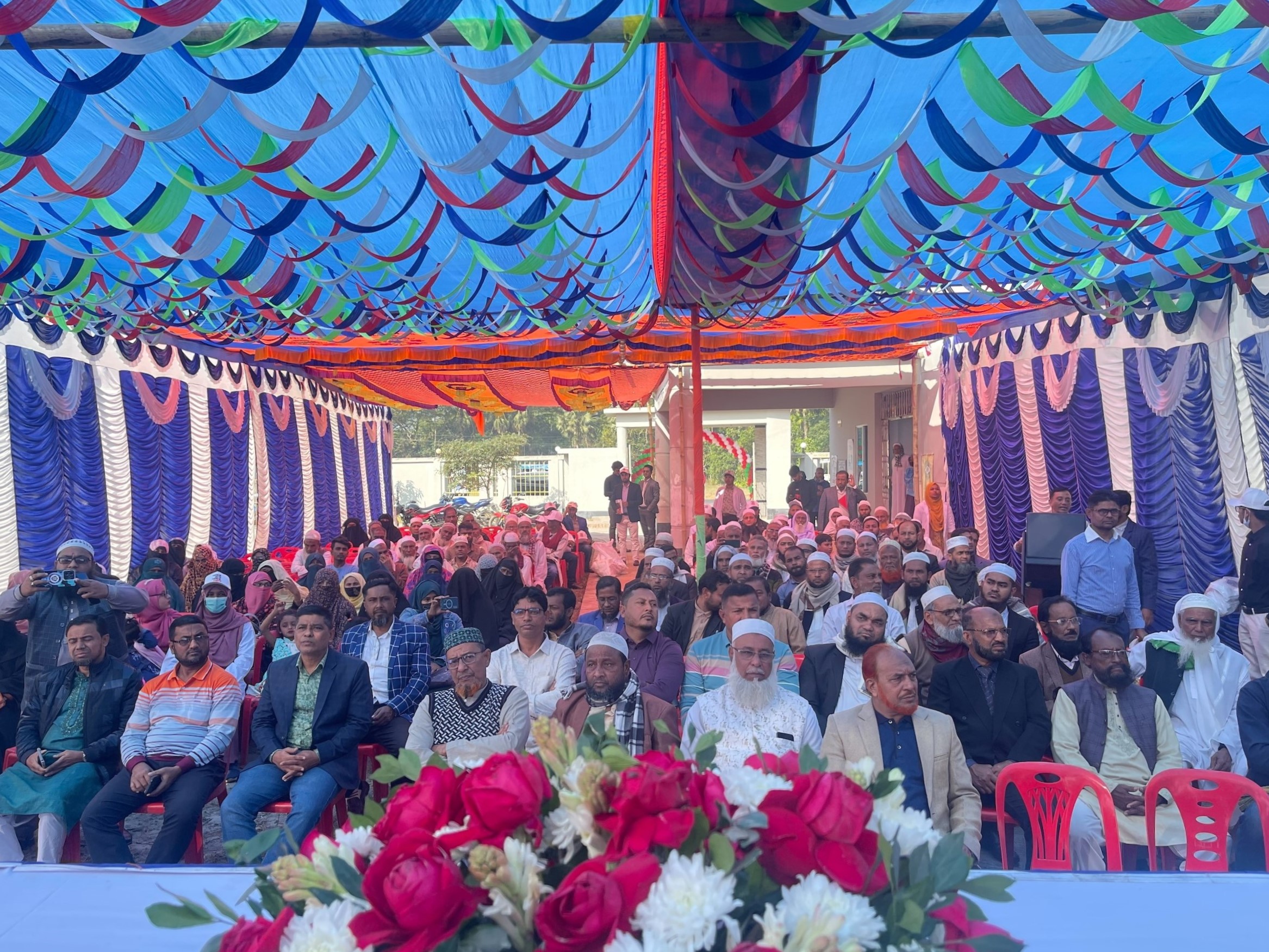
Photo 2 Caption: The audience at the opening ceremony for Our Eyes, Our Light, January 5, 2025.
The women, all sitting on my left, wear abayas covering their hair and lower faces, some brightly colored and patterned, others the more traditional solid black or dark blue. About half the men, sitting both right and left, wear an Islamic topi, a white skullcap. When we pass out baseball style caps featuring our Bengali logo, I’m amused that both women and men place the caps directly over their existing head coverings.
As the only Westerner, I’m out of place but via the translator express my excitement about seeing our plans transformed into action. For me, there’s special satisfaction in observing the tremendous benefits that we are providing, such as free reading glasses. Such wide-scale screening for eye problems has never been available here in coastal Bangladesh. Our project brings the social and economic benefits of good vision. After acknowledging our many organizational partners, I also reflect on the late diagnosis of my own severe near-sightedness. At age six, the teacher finally deduced that my academic struggles were because I could not see the classroom blackboard. I say nothing of my kidney disease and kidney transplant. If I were to have problems, the nearest modern medical facilities are a half-day’s drive away.
Foremost among our supporters is Resna Sharma, the 40-ish, fit looking, elected “Governor” of 519,000 people in the southern third of this impoverished, 8- by 60-mile island. With her modern uncovered hair, she boldly pledges to be the project’s first official screening subject, just as she had volunteered to be the first to receive the COVID-19 vaccine. She must see both political and practical benefit in our program. When the generator shuts off and her microphone abruptly goes dead, without pausing, she simply raises her voice to reach the back audience.
A major partner is the Bangladesh Disaster Preparedness Center (BDPC), a non-profit in Dhaka that works with international agencies as well as the government. We benefit hugely from the enthusiasm of its dynamic Director, Saidur Rahman, a tall and straight-standing 79-year-old with a neatly trimmed white beard and short thinning hair. The related Cyclone Preparedness Program (CPP) is a branch of the central government headed by Ahmadul Haque, a bulky, clean-shaven man in his mid-50s showing the first signs of graying hair. CPP has enlisted and trained thousands of volunteers in disaster management. Every village has recruited a dozen men and a dozen women for this critical role. Ahead of the work-heavy, high flood-risk cyclone months of May, October, and November, we are employing CPP volunteers to publicize and staff the screening initiative. Consistent with the island’s Islamic culture, we highlight and celebrate their community service. Soon after the opening ceremony ends, we hear the overlapping, dissonant calls to prayer broadcast through the megaphones of several nearby mosques. As we make our way across the open water of the Bay of Bengal, the surface of the gray, silty water is almost smooth. The Meghna River has so much outflow that the water here at the edge of this huge delta has only a quarter of the salt in typical sea water. One of the world’s largest rivers, the Meghna represents the confluence of the Ganges and Brahmaputra Rivers from India as well as additional flow added within Bangladesh. We cross a mile of open water before slipping between two islands on a meandering, narrow channel. The damp, barely up-sloping shores on either side end abruptly when they meet a wall of thick jungle. The muddy water’s edge smells of fish and is alive with birds. Each species has staked out its preferred territory so that conclaves of egrets, ibis, gulls, herons, and ducks have their separate domains along our route. Intermittently, we see wandering buffalo, cattle, and an occasional troop of monkeys. Like all the other animals, the monkeys are oblivious to our presence and unworried by the noise of the outboard engine.

Photo 3 Caption: Nozrul and Kawsar on the outboard motorboat headed for Dhalchar.
We pass several boats of assorted sizes coming towards us, all overloaded with passengers, who always give us a quick, nonchalant wave. None wear hats or sunglasses.
Besides me, there are three other team-members along in the boat. Nozrul, a BDPC manager and project accountant, has an analytical bent. I immediately notice his fascinating hand deformity: an extra, small finger growing off his right thumb. Kawsar is another Dhaka-based BDPC assistant. While low-key, he is a problem-solver assigned to look after me and the other guests. Finally, Shaon is the project’s Dhaka-based freelance photographer.
At one point, we see many moving bumps in the channel ahead of us. The captain slows the boat and says they are buffaloes. Slowly but powerfully, they swim across the waterway, only their mid-backs, horns, and snouts visible. One buffalo remains stranded, too reluctant to enter the water. Soon after, we are again crossing open ocean. Ahead, I see a strange wave-like form emerging from the water’s surface.
“It’s a dolphin!,” I shout, but quickly realize that it’s a floating buoy wavering against the strong current. Over the next five miles, we see more than 50 such buoys. Each buoy connects to an underwater cone-shaped fishing net drifting downstream that also is roped to an anchor on the sea floor.
We soon glimpse our destination with its tall palms and low buildings, some perched precariously near the edge of a small, eroding cliff. After landing, we climb a steep trail and see the maze of simple, corrugated steel shacks where a majority of Dhalchar’s 13,000 people live. The walls of many are corroded where the multiple layers of paint have fallen away. I see we will be switching to motorcycles for the next stage of our journey on this island without cars. With little time to get my bearings, I’m ushered onto a motorcycle seat behind a burly, 30-year-old wearing a bright orange CPP vest.
The project, called “Amar Chokh Amar Alo” (My Eyes, My Light), has grown out of a business venture with my friend and business partner, Hasib Rahman, a 50-year-old software engineer native to Bangladesh but American-educated and long-settled in Sydney, Australia. He’s tall and fit, but with the bulky look of someone who hides his extra weight well. With our company, Data Yakka, we are here to investigate the feasibility as well as costs, benefits, and unanticipated problems of mass eye-disease screening in a deprived rural area. In Australian slang, “Yakka” means hard, diligent work. Right now, the business requires much arduous work with unknown rewards. We’re using our own funds to move the project forward.
As a Professor of Medicine at Stanford University, I bring expertise in clinical care and public health. I’ve grown impatient with the usual academic sequence of grant proposals, minutely scrutinized research studies, and formulaic scientific articles. This process takes much too long to have a societal impact if it ever does. While I’ve conducted several randomized clinical trials, I naturally have doubts about my first foray into large-scale disease screening. More accustomed to treating and studying heart disease and diabetes, it’s been a steep learning curve to master the basics of eye care. Remote, coastal Bangladesh presents many layers of complexity beyond those faced in the U.S. For example, electricity is not available continuously, so a system of back-up batteries is needed for when the grid is turned off. Things haven’t always gone as expected in my overseas projects, where it is easy to misjudge the intricacies of culture and local practices. A decade ago, I found myself in over my head leading a joint project with a top Chinese university. Despite my enthusiasm, massive effort, and initial success, the project faltered when I inadvertently overstepped my role. I’m still not sure exactly why I was replaced, but my Stanford successor made a point of her ability to speak Mandarin.
Thankfully, Hasib’s business acumen and engineering talents complement my expertise. He has developed and secured our partnerships, obtained local buy-in, designed the client workflow by working numerous 60-hour weeks. Of course, he’s never done anything like this either. Nonetheless, his efficient, home-grown computer platform and database as well as the use of artificial intelligence distinguishes our project from others conducted around the globe. Many, such as those organized by ORBIS and other foundations, fly in a contingent of highly trained volunteers and all the equipment and devices needed. While they provide high quality care, these efforts come and go quickly, often have limited community engagement, and are not sustainable over time. Our program is training and using local staff, interfacing continually with the community, and has hopes of long-term operation after our initial 6-month pilot phase.
The project operations leader is BDPC manager, Laila Kabir. She has the poise and presence from having worked closely with Saidur Rahman for two decades. She is now here in Char Fasson and will return every month for onsite supervision. She helped select this island based on the presence of CPP’s volunteer network, high population density and good transport systems, an eye hospital willing to accept referrals, and local political support. We had initially selected a different island. We switched to Char Fasson after escalating and compromising demands from local leaders. Even in Char Fasson, a town official insisted that we hire his two daughters. As a compromise, we hired the more qualified and talented of the two. The four motorcycles take off but strangely halt after a few hundred feet. We stop briefly for tea with the village leaders, two men in their mid-50s with henna-dyed red beards. They first acknowledge their fellow villagers in their bright CPP vests, then cordially greet the four of us. A shopkeeper serves small glasses of tea, with its few floating leaves, either with sugar, or both milk and sugar. We then roll along a small, dark green pond entirely rimmed by houses of varying styles, honking frequently to warn children, goats, and dogs of our approach. A few houses are large and well-constructed. There are several rows of concrete barracks, but mostly just small and haphazardly constructed corrugated steel huts. As we bump along the brick pathway built atop a long levee, we pause frequently. At these momentary stops, I see the faintly red nets draped 50 feet across the ground for mending. While mostly passable, the path is falling into disarray.

Photo 4 Caption: A typical section of the pedestrian and motorcycle pathway on Dhalchar.
The dull red bricks have sunk below the level of the pathway and then down the sides of the levee. This frequently leaves only a precarious, narrow route for the motorbikes. Fixing this problem will be difficult, but without repair it will only worsen. Bouncing along, I instinctively grab my driver’s sizable mid-section when we abruptly rise-up and then roll down drop-offs where the arching concrete bridges cross small canals. I’m reminded that my eagerness to explore the world has resulted in a lengthy list of outdoor calamities. I’ve fractured my clavicle and herniated my C5-C6 disc in separate cycling mishaps, been caught in too many thunderstorms with lightning flashing around me, turned over a kayak when I surfed straight into a submerged rock, and spent a rainy night at the dry edge of a huge boulder after losing my way in the Argentine Andes. Only now and then do I feel at risk of falling off the motorbike; I might be afraid but I’m not going to panic.
After a mile, we stop at a humble, but well-constructed corrugated steel house standing alone and set back from the path with its own small pond. Inside, a lengthwise wall divides the interior into two 8- x 20-foot rooms. One room contains a sitting area and two raised beds. The other has a kitchen, a storage area, and another sleeping platform. Five people in three generations live here. Mr. K., the smiling 70-year-old household elder, is one of two men we will bring back to the main island for eye screening today.
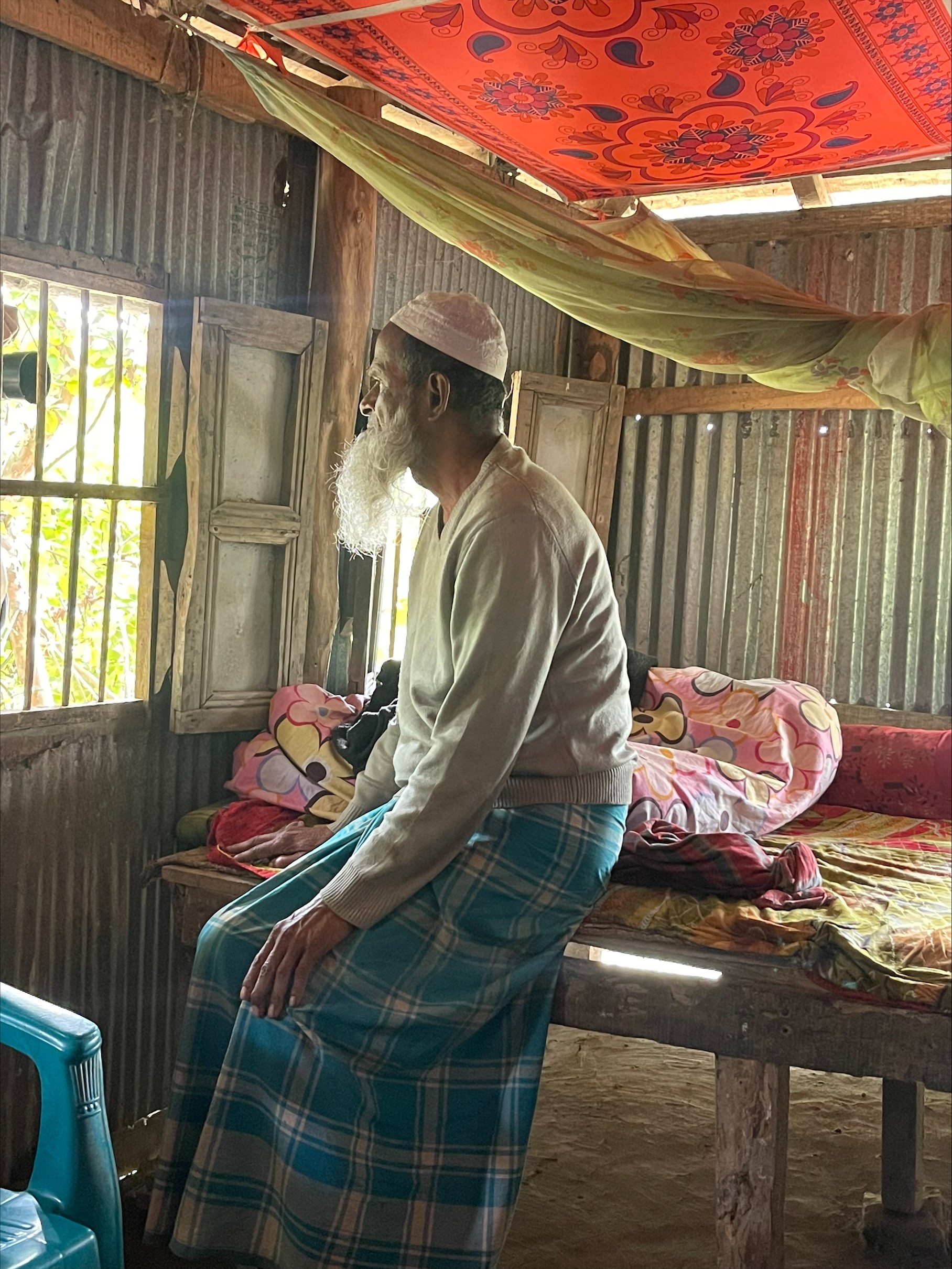
Photo 5 Caption: Mr. K., our first Dhalchar to Char Fasson transport client in his home.
Dhalchar’s poverty is blatant up close. Missing here are the many amenities that I take for granted like indoor toilets, painted walls, a table for eating, running water, and glass windows. This is a hard life on this low-lying island with its shifting edges. Existence here is frequently threatened by flooding, which has increased due to global warming. The island’s villagers are utterly dependent on fishing, which has suffered severely from overfishing and diminishing fish stocks of the silvery Indian River Shad and the gold-tinged Croakers.
Mr. K. has graciously invited me into his home. Sitting in the warm shade looking out the open front doorway, I see these people are content. I marvel at the calming simplicity of life here. Though I realize this is overly romantic and tinged by my own privilege, it feels true, as do all the weighty downsides of life here. The benefits of close contact with nature are abundant, but the menace of disrupted nature is staggering. This life is better than the dense, unsanitary urban poverty I’ve observed in Dhaka and a dozen other cities around the world. Those enduring slum life reap none of the benefits of nature, while contending with the worst inclinations of their fellow humans through deprivation, economic exploitation, squalor, and violence. I worry that these island villagers are heading towards urban poverty as life here becomes even more arduous and impractical and they are forced eventually to relocate to large cities.
On the main island, Char Fasson has areas of rural poverty and urban congestion. But poverty is far from consistent, and the urban areas feature better housing and minimal squalor. Our screening clinic is in a new building located across the roadway from a well-kept, small farm but not too distant from two small, semi-urban villages, each with several mosques. At the clinic, the heart of our eye screening process is a new generation retinal camera that takes extremely detailed photos of the back of the eye without the use of eye drops. To this, we add the efficiency of AI interpretation, which can’t be definitive, but suggests a diagnosis for eye specialist confirmation. This process detects glaucoma, macular degeneration, changes from high blood pressure, and diabetic retinal problems. This site is effectively a self-funded demonstration project to prove the ability of Data Yakka and its technology to conduct mass eye disease screening. We are losing money initially in hopes that we can make a business out of more widespread, screening efforts in Bangladesh and elsewhere paid for by the government or philanthropic funders. We’ll also develop a Bangladesh-specific AI algorithm for use in this country of 171 million people. But for me, making money is less important than having a health impact, though it’s not that I am so financially secure. I’m completely aware that my career and my own good health despite kidney disease have depended on highly technical and expensive American healthcare, a system more intent on making money than genuinely caring for patients.
Back on the motorcycles, we continue a short distance down the brick pathway until we reach the far, south side of the island. Here, we walk to a beautiful beach area set up for eco-tourism with large camping tents and a lodge. The beach is minutely and geometrically decorated by the action of small crabs who dart in and out of their tiny holes. Looking toward the horizon, due South from here, there is nothing but ocean all the way to Antarctica. I’m told the beach is growing larger here, the river effectively shifting land from the north side of the island to its south side.
We retrace our bumpy route toward our starting place. Nearing the main populated area, we abruptly take a sharp right to find a newly constructed village of 400 people. Built by the government for those displaced by flooding on other islands, the village consists of two exceptionally long, shiny steel warehouses with a 30-foot-wide, sandy Main Street running between them. A volleyball net with boundaries marked by metal cables sits midway along the street. The linear building on the right has been subdivided into small living units, while the left one is unevenly partitioned for various businesses. Small markets and tea stalls occupy tiny business spaces with larger spaces for marine engine repair, fishing nets, marine electronics, and wooden boat repair. I’m impressed by the practicality of this new town, though saddened by the displacement and suffering caused by the river’s ability to take away land.
We find our second client, Mr. A., living in a net repair shop on the business side. This 75-year-old has not been allocated space as a resident but has negotiated with the shop owner to live here.
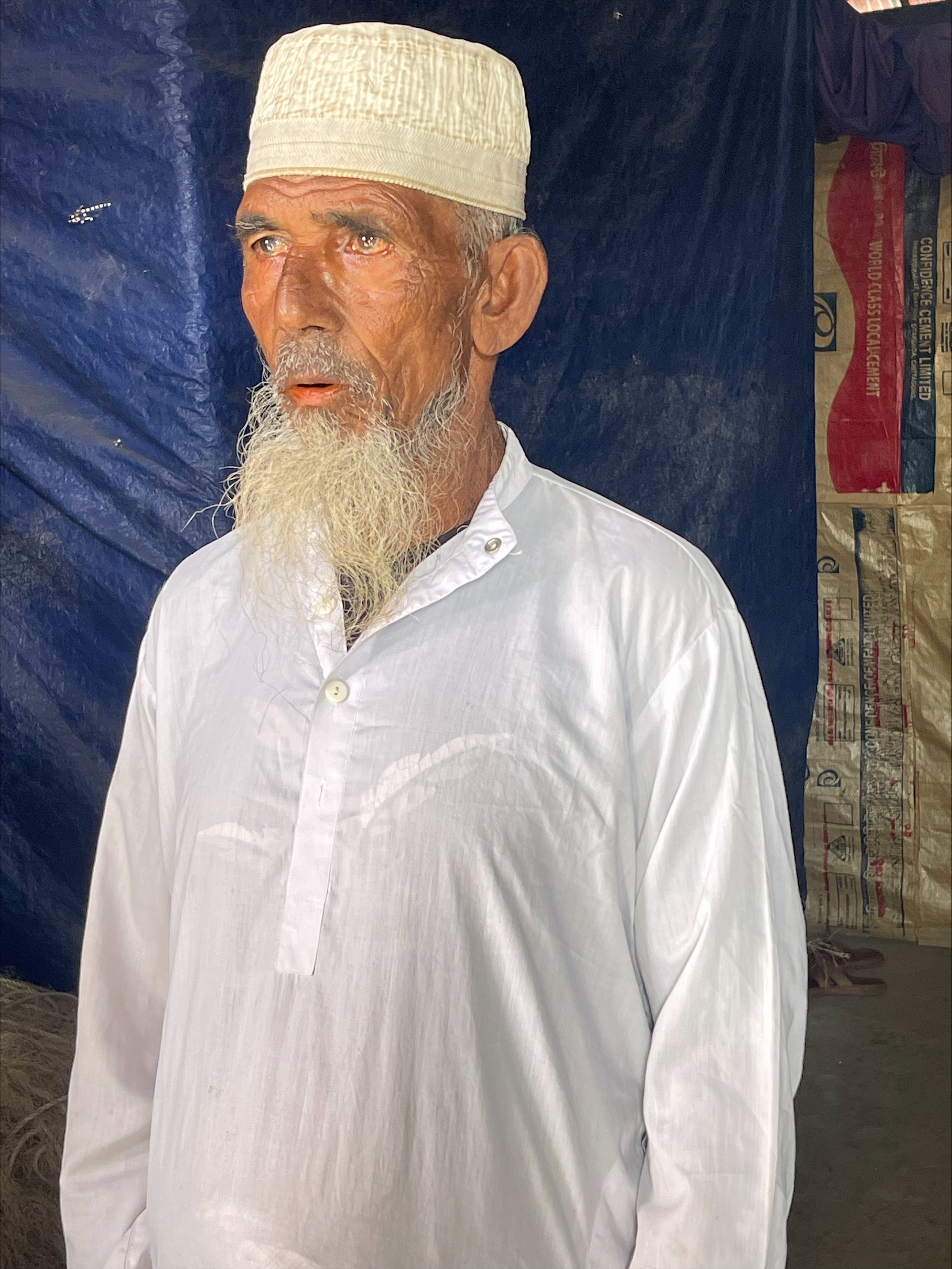
Photo 6 Caption: Mr. A., our second transport client in his new housing for flood-displaced people.
He wears a traditional topi cap and a white, shirt-like smock ending near his knees. The clothing closely matches the color of his white beard and thinning hair. Even at a distance, I see that he has cataracts. The lenses of both eyes are no longer transparent, but cloudy, a common affliction from ultraviolet light exposure among people working outdoors, particularly fishermen who endure the reflecting effect of the water. He will benefit enormously from cataract surgery. I realize how few people I’ve seen wearing sunglasses or brimmed hats, two practical approaches for preventing cataracts.
Back at our starting place, we see our small boat stuck in the mud by the retreating tide. The captain takes off his sandals and, walking barefoot through the mud, calmly dislodges the boat by slowly pushing it into the water using a rocking motion. Along with our two extra passengers, we awkwardly board the boat. We retrace our route along the murky water, now choppier than earlier. We again see the vast array of nets set in the main open water with occasional small boats tending them. Our elderly guests, not used to traveling this fast, are very much enjoying the ride.
Our driver meets us at the launch area and again navigates the complex, deadly traffic with his usual poise. Though still anxious about the drive, I’ve gained more equanimity as the van’s driver weaves his way back to the clinic. We’ve already registered the two elderly men remotely, so we skip the first-floor intake area. With us, they slowly climb the stairs to the third floor. We are using the first and third floors of a new, but elevator-less building designed as a family planning clinic. Sadly, after the government was unable to hire nurses to staff the clinic, the funding was reallocated. We’ve received permission, with the Governor’s help, to use the otherwise empty facility. Once upstairs, we guide our two elderly clients through the screening stations, including: 1) blood pressure measurement and finger-stick blood glucose, 2) assessment of distance and reading vision, 3) a slit-lamp exam of the front parts of the eyes, 4) taking retinal photos, and 5) check-out where the clients receive a formal report and laminated retinal photos. Once they complete the 25-minute process, the elderly men take time to pray at the nearest mosque before their journey home. We get them back to Char Fasson’s southern boat launch in time to take the public, alternating day, 3 PM slow boat back to Dhalchar. Not surprisingly, both have severe cataracts. We’ve scheduled them for surgery. Once cataract surgery removes their cloudy lenses and replaces them with transparent plastic lenses, they will return to re-do the vision testing and retinal photos. After our successful test run, we decide to continue this special transport service for Dhalchar villagers, knowing that improving life on Dhalchar is a priority for the local government. We slowly and ceremoniously screen 37 imams and political leaders on the inaugural day. As promised, Governor Resna Sharma is the very first person screened, followed by Ahmadul Haque of CPP.

Photo 7 Caption: Resna Sharma, leader of the Char Fasson District, obtains a slit-lamp eye exam.
The next day, our first day of full operations, we screen 150 people, then 175 and 140 on the second and third days. Of those screened, 60% are women, an unusually high figure in a culture where men often come first. All those screened have received services previously unavailable to them.
I’m ecstatic that we have so vastly exceeded our expectations. It has been an amazing and exhausting experience. I made it back safely from the successful Dhalchar journey though I realize that my challenges were, for the villagers, daily experiences. I take for granted so many of life’s comforts back home. My perspective on global poverty has shifted towards anger and I’m upset by how few Westerners understand the lives of global “others.” So often our leaders engage in victim blaming, pretending that if people of distinct cultures, politics, religions, or skin color would just think like us, they wouldn’t be so poor. The structural underpinnings of poverty, both at home and internationally, are hidden by myths about hard work and merit-based achievements. We aren’t held accountable for the global problems we create, particularly climate change and its immense impact on rural poverty. I’ve also learned that good intentions must be paired with the detailed planning and careful division of labor made possible by an engineering mindset. These new insights make me more eager than ever to help improve the health of these resilient people as they struggle against forces not of their own making. Inspired by them and those working by my side, to have this palpable impact, I’m willing to take on whatever logistical or physical challenges come my way.
Photograph Captions (All photographs by the Author)
Photo 1: Late afternoon in the heart of Char Fasson’s urban center.
Photo 2: The audience at the opening ceremony for Our Eyes, Our Light, January 5, 2025.
Photo 3: Nozrul and Kawsar on the outboard motorboat headed for Dhalchar.
Photo 4: A typical section of the pedestrian and motorcycle pathway on Dhalchar.
Photo 5: Mr. K., our first Dhalchar to Char Fasson transport client in his home.
Photo 6: Mr. A., our second transport client in his new housing for flood-displaced people.
Photo 7: Resna Sharma, leader of the Char Fasson District, obtains a slit-lamp eye exam.
Download a copy of Rural Poverty, Hope, and AI: An Eye Screening Journey to Coastal Bangladesh – Randall Stafford, MD, PhD
Bio: Randall Stafford is a Professor of Medicine at the Stanford University School of Medicine. His writing often combines his chronic disease expertise with his life-long kidney disease. Scientific articles are the heart of his research career, his writing passion lies in creative non-fiction. As of April 2025, the Our Eyes, Our Light eye screening initiative has served more than 8,500 clients.
 JNV: The Journal of Narrative Visions